When Enablers Shield Predators and Parasites, They Fuel Disaster.

History provides vivid lessons on how human intentions, when misapplied, can turn destructive. One of the most famous examples is the Cobra Effect during British colonial rule in Delhi. What began as a well-meaning attempt to reduce poisonous snakes ended in disaster — with the cobra population actually multiplying. This story is more than a historical anecdote; it is a metaphor for how enablers, by shielding or rewarding Predators and Parasites, inadvertently empower them. This destructive cycle is what we call The Enabler’s Effect.

The Cobra Story Revisited
In Delhi, officials worried about the rising number of venomous cobras.
They introduced a bounty for every dead cobra.
At first, the scheme seemed successful — many cobras were killed.
But locals quickly exploited the incentive by breeding cobras for profit.
Once the government canceled the scheme, breeders released their now-worthless snakes.
The outcome? Far more cobras than before.
This paradox illustrates how well-intended policies — or enabling behaviors — can worsen the very threat they aimed to solve.
The Enabler’s Effect Defined
The Enabler’s Effect occurs when:
An intervention or act of support unintentionally strengthens destructive behavior.
Predators (evil + strong) or Parasites (evil + weak) are shielded from consequences.
Instead of reducing harm, the system sustains or magnifies it.
In short: When enablers protect exploiters, they make the problem harder to solve.
Manifestations of the Enabler’s Effect
1. In Governance
Subsidies that foster dependency instead of self-reliance.
Loopholes that criminals and corrupt officials learn to exploit.
Reward systems that unintentionally encourage manipulation.
2. In Families and Relationships
Parents excusing irresponsible behavior in children.
Partners tolerating betrayal or addiction under the guise of “love.”
Friends covering for repeated mistakes instead of demanding accountability.
3. In Workplaces
Leaders promoting loyalty over competence.
Teams compensating for a negligent member instead of addressing the root cause.
Cultures where mediocrity is tolerated to “keep peace.”
4. In Personal Life
Shielding oneself with excuses instead of facing consequences.
Overindulging in comfort at the cost of growth.
Allowing destructive habits to thrive unchecked.
Lessons from the Cobra Effect
Good Intentions Alone Aren’t Enough
Compassion without clarity can produce harm.
Unexamined Rewards Breed Exploitation
Predators and Parasites adapt to exploit loopholes.
Withdrawal Without Repair Backfires
Ending flawed systems abruptly can unleash worse outcomes.
Breaking the Enabler’s Cycle
Clarify Incentives → Ensure rewards align with accountability and responsibility.
Allow Consequences to Teach → Growth requires facing the results of one’s actions.
Monitor and Adjust → Evaluate whether help is solving or worsening the problem.
Build Long-Term Solutions → Focus on self-reliance, boundaries, and integrity.
Conclusion
The cobra story teaches us a universal law: When enablers shield Predators and Parasites, they fuel disaster. By protecting the manipulator (Parasite) or empowering the dominator (Predator), enablers entrench harm. Whether in governments, families, workplaces, or personal lives, the lesson is timeless:
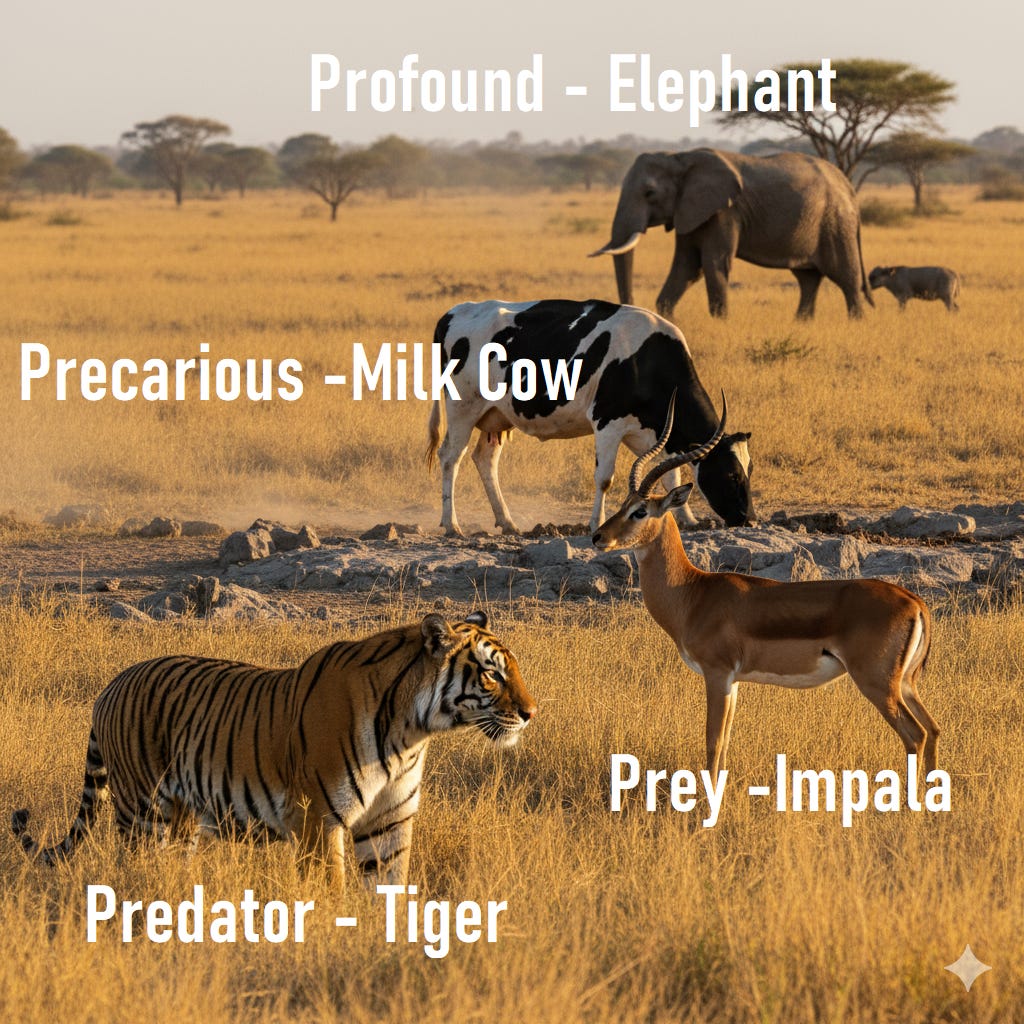
Evil + Weak = Parasite (Non-Reciprocity)
Evil + Strong = Predator (Non-Reciprocity + DARVO)
Good + Weak = Prey (Over-Giving Without Boundaries)
Good + Strong = Protector (Reciprocal, Accountable, Boundary-Aware)
True strength lies not in enabling, but in discerning. When we refuse to shield exploiters, we empower the innocent and protect the whole.
The Enabler’s Effect — 10 Quick Lessons
Good intentions ≠ good outcomes — Without discernment, help can harm.
Shielding evil empowers it — Parasites and Predators thrive when protected.
Unexamined rewards breed abuse — Loopholes invite exploitation.
Parasites exploit non-reciprocity — They take without giving back.
Predators exploit with DARVO — They deny, attack, and reverse blame.
Prey suffer silently — Over-giving without boundaries destroys them.
Protectors uphold balance — Accountability, reciprocity, and boundaries preserve life.
Consequences teach best — Removing them stunts growth.
Withdrawal without repair multiplies harm — Abandoned systems backfire.
Discernment is protection — True care empowers the innocent, not the manipulator.
Core Maxim:
When enablers shield Predators and Parasites, they fuel disaster.