
Responsibility Interpretation by W–I–S–E
From Burden to Power: The Inner Lens That Shapes Outer Reality

Responsibility is not merely a task assigned—it is a psychological mirror. It reveals how an individual relates to reality, pressure, ownership, and growth. Two people may carry the same responsibility, yet live entirely different experiences. Why? Because responsibility is not objective—it is interpreted.
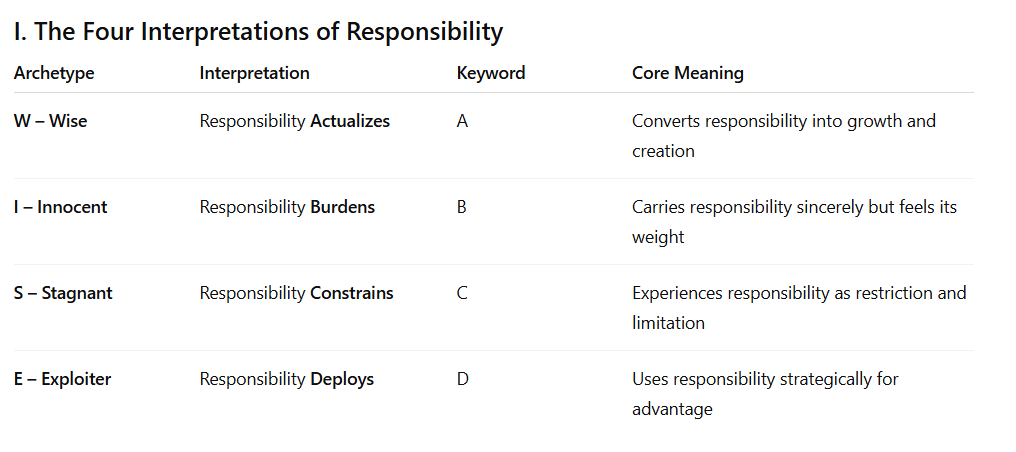
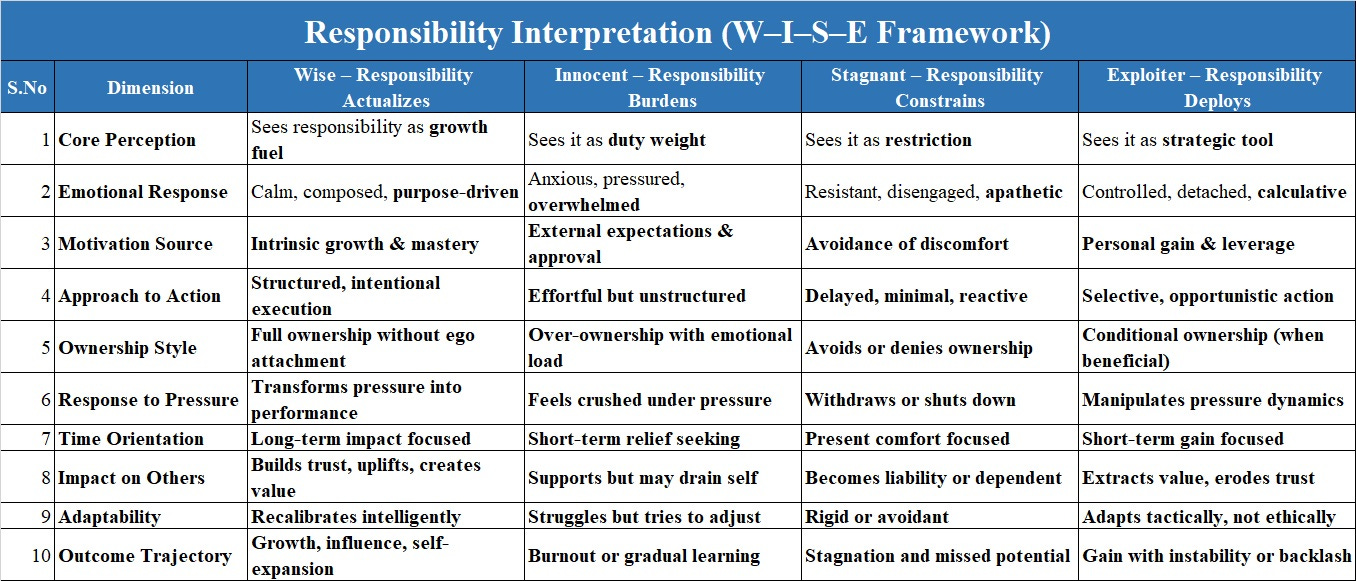
This essay presents a fourfold archetypal framework—W–I–S–E (Wise, Innocent, Stagnant, Exploiter)—to understand how responsibility is perceived, processed, and expressed. Each archetype does not merely behave differently; it translates responsibility into a different inner meaning, which then shapes outcomes.
I. The Four Interpretations of Responsibility
The Allegory of the Granite Block
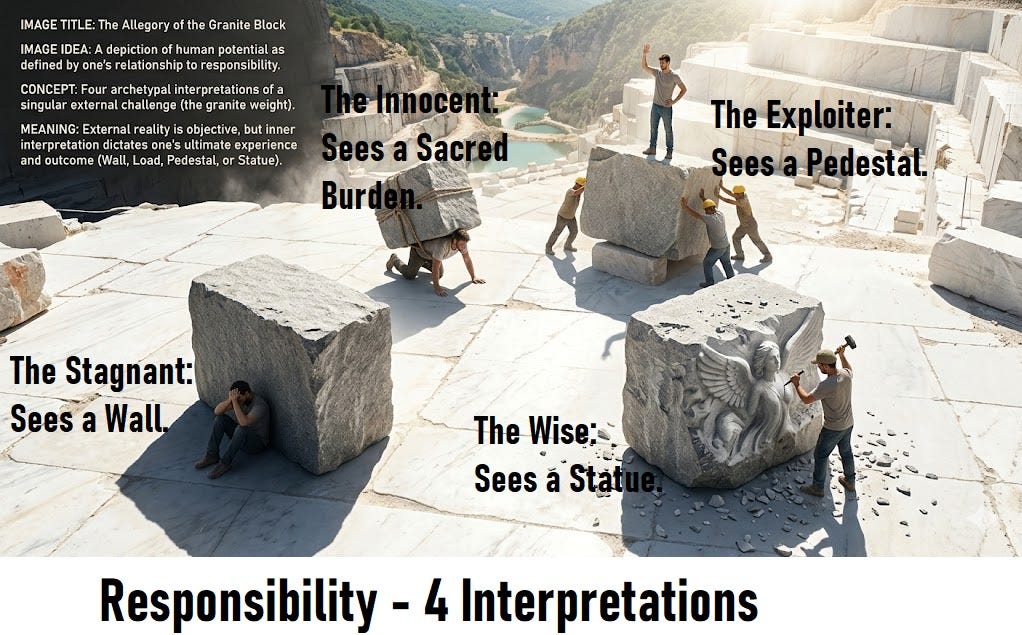
Imagine four people standing before a massive block of granite. The external reality (the weight) is identical for all four.
The Stagnant: Sees a Wall. They stop moving, sit in its shadow, and complain that the path is blocked. To them, the weight is a permanent restriction of their freedom.
The Innocent: Sees a Sacred Load. They strap the stone to their back and begin to crawl. They are sincere and exhausted, believing the “heaviness” is proof of their goodness.
The Exploiter: Sees a Pedestal. They find a way to make others push the stone into a prominent position so they can stand on top of it to be seen.
The Wise: Sees a Statue. They take out a chisel. They understand the weight is the raw material required to manifest a higher form. They don’t carry the stone; they shape it until the “weight” becomes “art.”
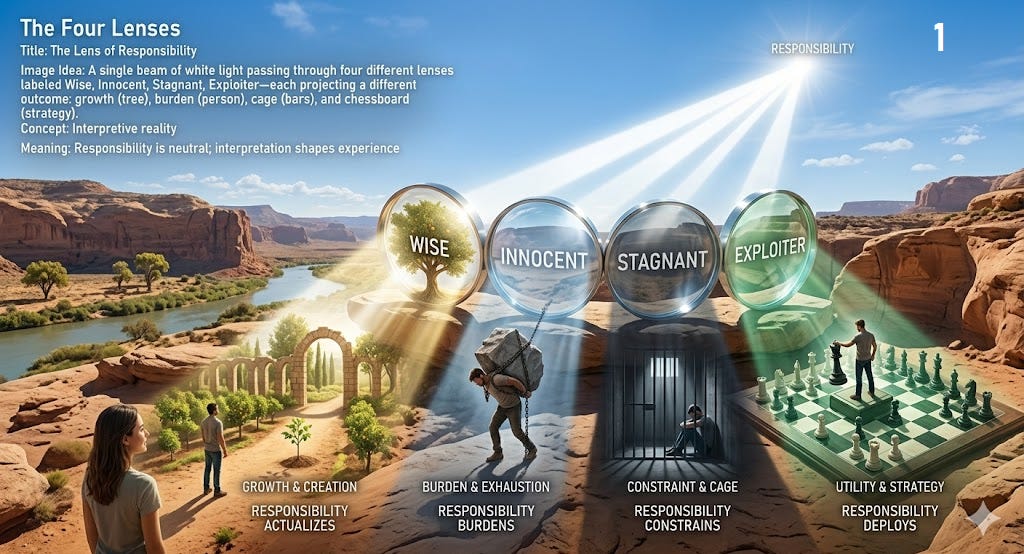
II. The Core Principle: Responsibility Is a Lens
Responsibility does not change. The interpreter does.
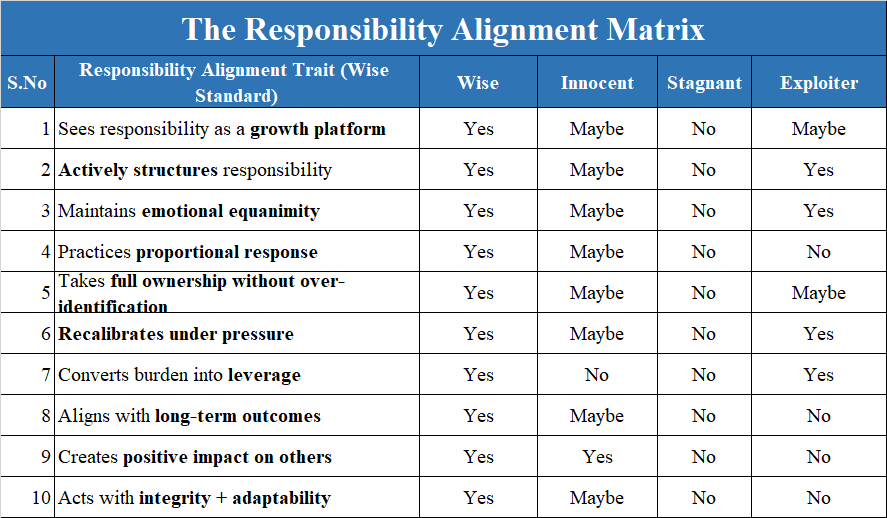
The Wise sees opportunity
The Innocent feels pressure
The Stagnant sees restriction
The Exploiter sees utility
Axiom 1:
Responsibility is neutral; interpretation determines its impact.
Axiom 2:
The same weight that strengthens the Wise suffocates the Stagnant.
III. The Wise Archetype: Responsibility Actualizes
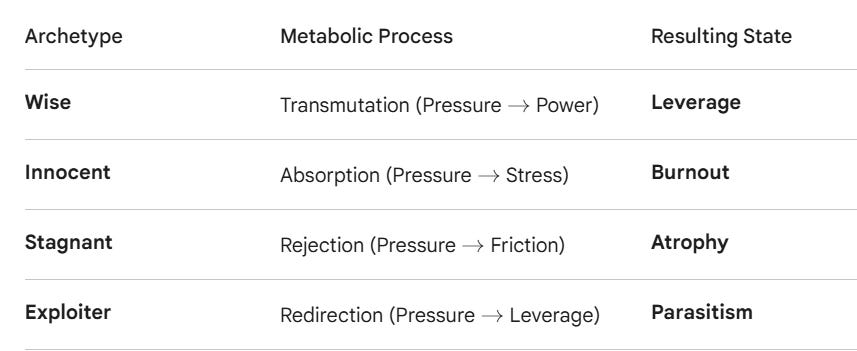
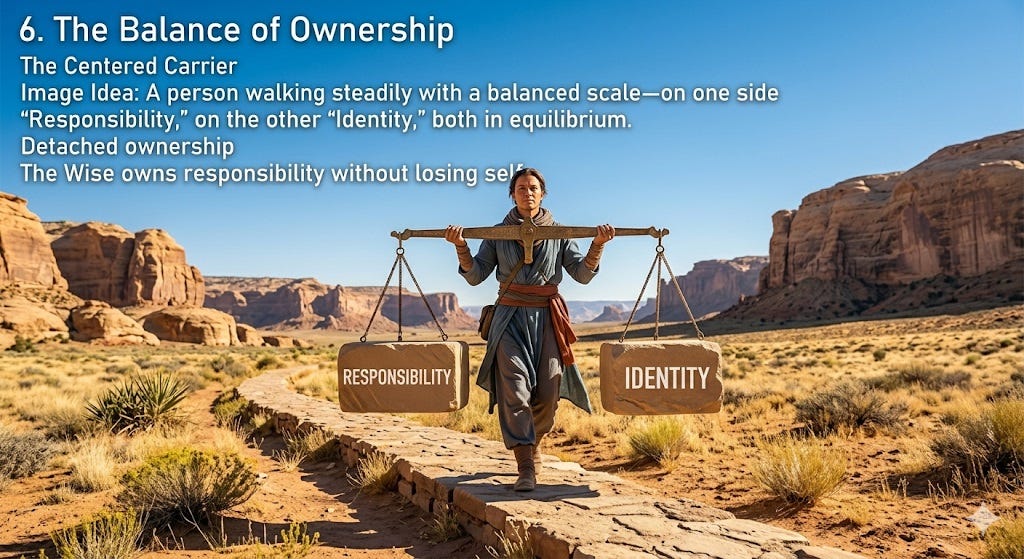
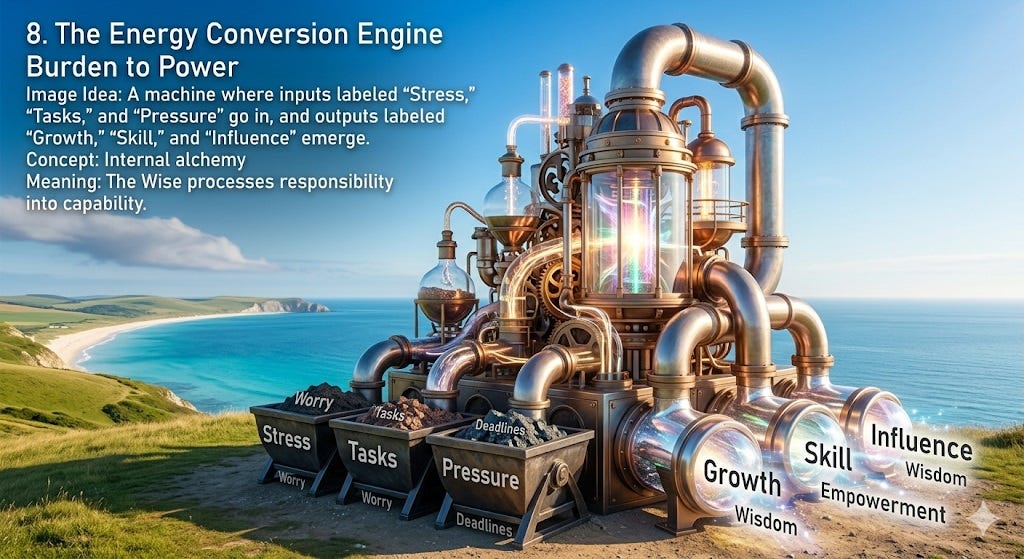
The Wise does not merely carry responsibility—they transmute it.
Core Orientation
Responsibility = Platform for growth
Pressure = Refinement mechanism
Ownership = Power
Behavioral Patterns
Structures tasks into actionable systems
Maintains calm under pressure
Converts challenges into learning loops
Aligns actions with long-term outcomes
Key Insight
The Wise does not ask, “Why me?” but “What can this make me?”
Maxims of the Wise
“Responsibility expands the one who embraces it.”
“Ownership is the doorway to influence.”
“Pressure is a sculptor, not an enemy.”
Aphorism
The Wise turns weight into wings.
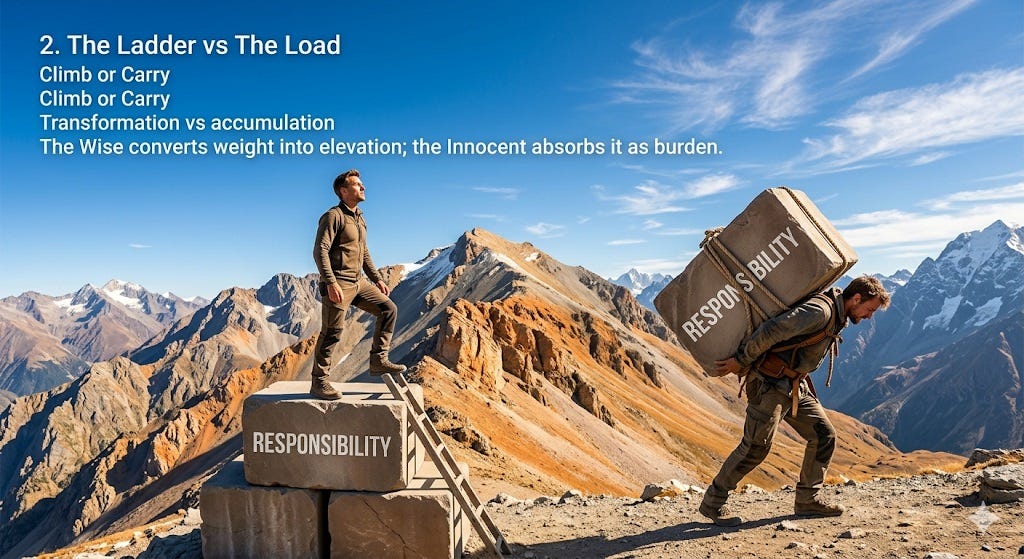
IV. The Innocent Archetype: Responsibility Burdens
The Innocent accepts responsibility, but without internal strength or structure.
Core Orientation
Responsibility = Duty
Pressure = Emotional weight
Ownership = Obligation
Behavioral Patterns
Tries sincerely but lacks systems
Feels overwhelmed easily
Seeks validation or relief
May overcommit and under-deliver
Key Insight
The Innocent confuses sincerity with capability.
Maxims of the Innocent
“I must do it, even if it drains me.”
“If I try hard, it should be enough.”
“Responsibility is heavy but unavoidable.”
Aphorism
The Innocent carries the load but not the leverage.
V. The Stagnant Archetype: Responsibility Constrains

The Stagnant resists responsibility internally, even if externally compliant.
Core Orientation
Responsibility = Limitation
Pressure = Threat
Ownership = Avoidance
Behavioral Patterns
Procrastinates or withdraws
Minimizes effort
Avoids accountability
Feels trapped or controlled
Key Insight
The Stagnant sees responsibility as something that takes away freedom, not something that builds it.
Maxims of the Stagnant
“Why should I do this?”
“This restricts my freedom.”
“Less responsibility, more comfort.”
Aphorism
The Stagnant trades growth for temporary ease.
VI. The Exploiter Archetype: Responsibility Deploys
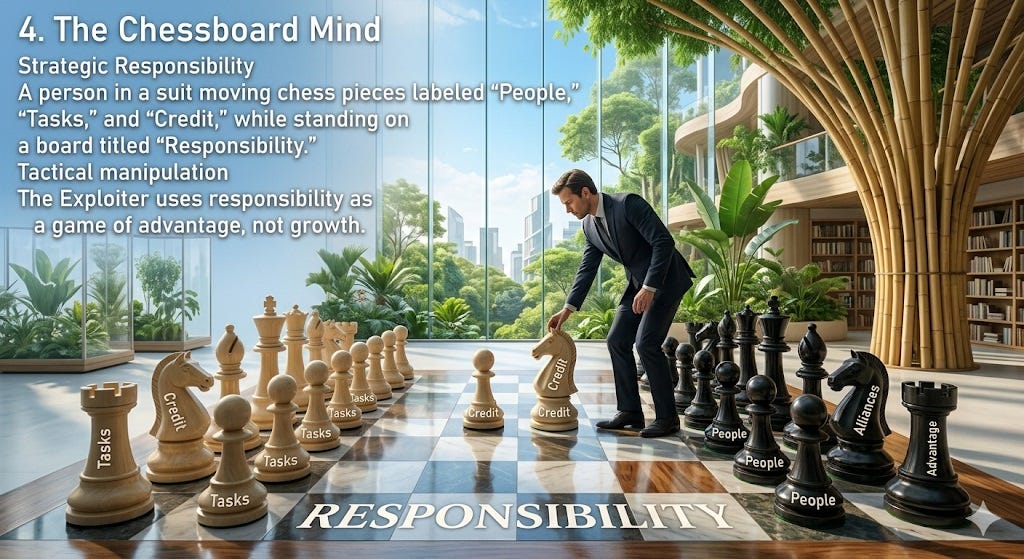
The Exploiter uses responsibility, but not for growth—for gain.
Core Orientation
Responsibility = Tool
Pressure = Game
Ownership = Strategy
Behavioral Patterns
Takes responsibility when beneficial
Delegates or deflects when risky
Uses others’ effort for personal gain
Maintains composure, but lacks integrity
Key Insight
The Exploiter is capable—but not aligned.
Maxims of the Exploiter
“What can I gain from this?”
“Use the system before it uses you.”
“Appear responsible, benefit strategically.”
Aphorism
The Exploiter climbs using ladders built by others.
VII. The Responsibility Alignment Matrix
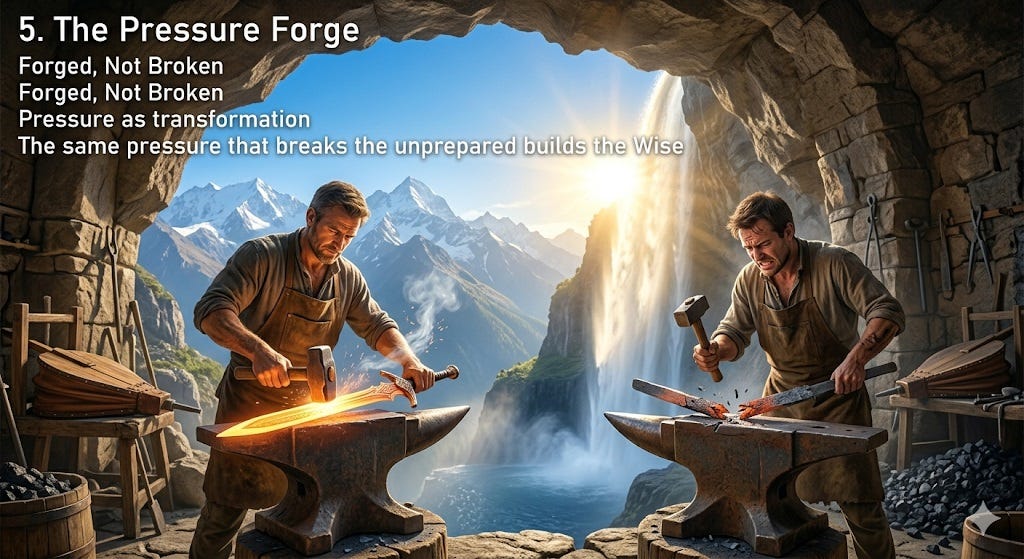
VIII. The Evolution Path: From Burden to Actualization
Human growth is not about eliminating responsibility—but upgrading its interpretation.
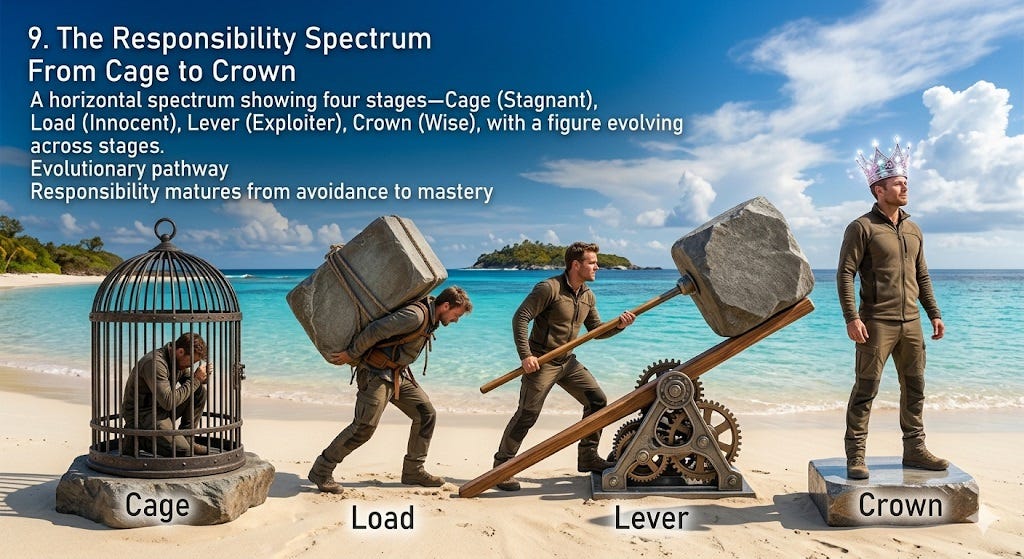
Stage Progression
Stagnant → Innocent
From avoidance to acceptance
Innocent → Exploiter
From sincerity to strategic awareness
Exploiter → Wise
From strategy to integrity-aligned mastery
Axiom 3:
Growth is the refinement of how responsibility is interpreted.
IX. Practical Insights: Rewriting Your Responsibility Code

To move toward the Wise archetype:
1. Reframe Responsibility
From “I have to” → “I get to grow through this”
2. Build Structure
Break responsibility into systems, not emotions
3. Regulate Emotion
Pressure is information, not danger
4. Separate Identity from Role
You are not your responsibility—you are its steward
5. Think Long-Term
Immediate discomfort often creates future freedom
X. High-Precision Aphorisms
Responsibility accepted without structure becomes burden.
Responsibility avoided becomes decay.
Responsibility exploited becomes corruption.
Responsibility mastered becomes creation.
Freedom is not the absence of responsibility; it is the result of mastering it.
The weight you resist becomes your prison; the weight you refine becomes your strength.
XI. Final Synthesis
Responsibility is the great divider of human potential.
To the Stagnant, it is a cage
To the Innocent, it is a load
To the Exploiter, it is a tool
To the Wise, it is a ladder
The external world distributes responsibility randomly. But the internal world determines whether that responsibility becomes:
Oppression
Exhaustion
Manipulation
Transformation
Final Maxim
You do not rise by avoiding responsibility—you rise by interpreting it correctly.
Closing Insight
Responsibility is not asking you to suffer.
It is asking you to evolve.
The question is not:
“How much responsibility do you have?”
The real question is:
“What does responsibility mean to you?”