Manipulation Vs Passive Aggression

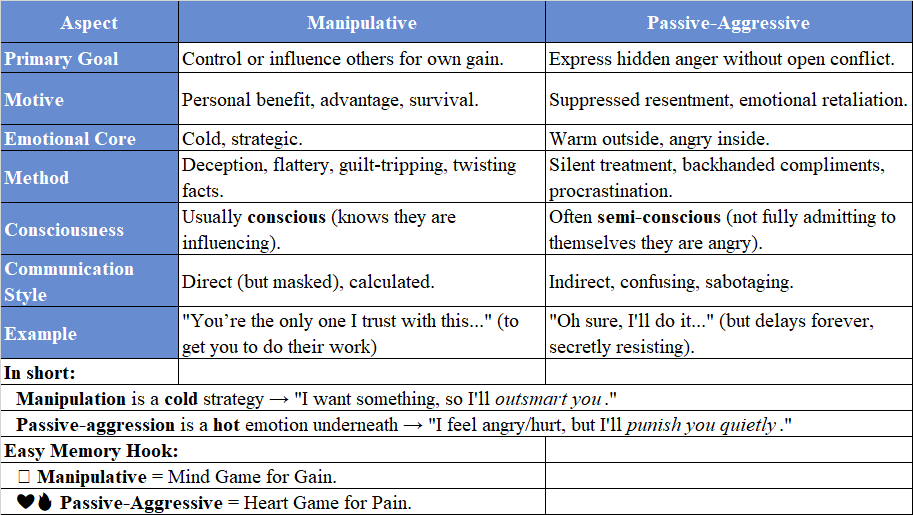
🧠 Manipulative = Mind Game for Gain.
❤️🔥 Passive-Aggressive = Heart Game for Pain.
In every relationship—whether personal or professional—there are invisible games being played. Two of the most damaging yet often unnoticed patterns are manipulation and passive-aggressiveness. They operate differently, but both aim to tilt the emotional playing field. Understanding the distinction can change the way we recognize, respond to, and ultimately protect ourselves from emotional exploitation.
Manipulation is a mind game for gain.
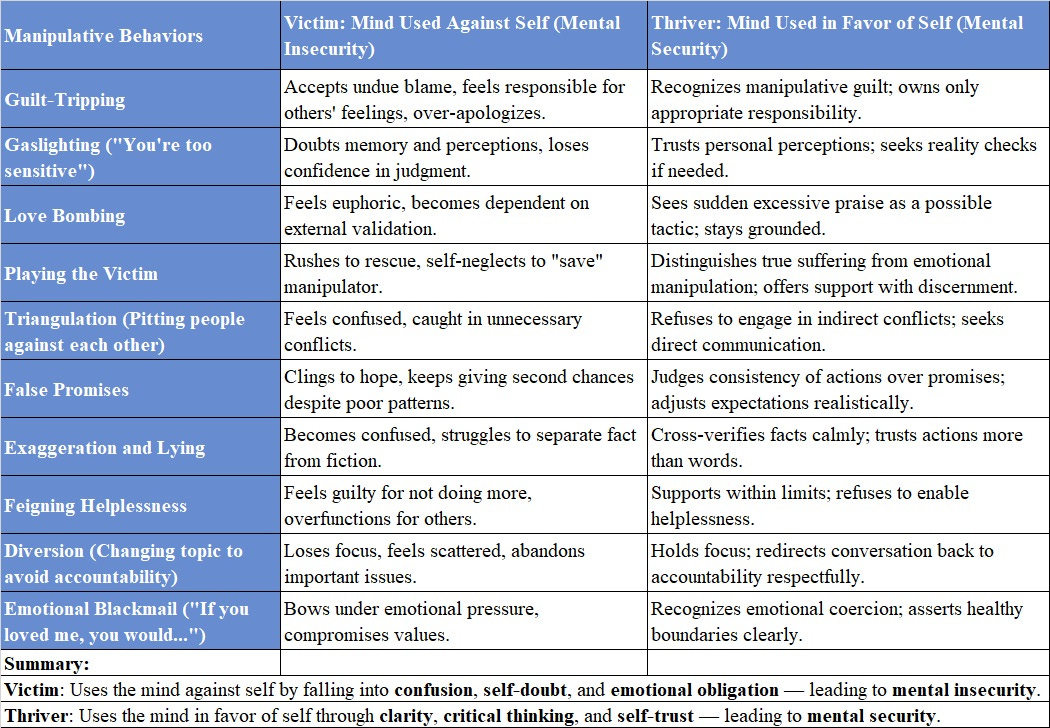
The manipulator is not necessarily driven by open hostility. They operate with precision, using tactics like guilt-tripping, gaslighting, flattery, or strategic omissions. Their goal? To create a reality where you, without fully realizing it, serve their interests. It’s a silent theft—not of material wealth necessarily, but of your choices, your clarity, your energy.
The manipulator’s victory lies in your confusion and compliance.
They thrive when you second-guess your instincts. You might start doing things you otherwise wouldn’t, prioritizing their needs over your own, even feeling obligated to please or "fix" them. The mind game is subtle, calculated, and centered around gain—whether emotional, social, financial, or status-based.
Signs you’re being manipulated include:
Feeling guilty without clear reason.
Constantly doubting your perceptions.
Doing things against your own best interest "for peace."
Being emotionally drained after interactions.
Passive-aggressiveness, on the other hand, is a heart game for pain.
The passive-aggressive person does not directly express anger or dissatisfaction. Instead, they deliver their hostility under the mask of politeness, sarcasm, silence, or delayed sabotage. Unlike the manipulator who seeks gain, the passive-aggressor seeks to inflict pain—to wound, confuse, or punish you without overt confrontation.
It’s an emotional ambush.
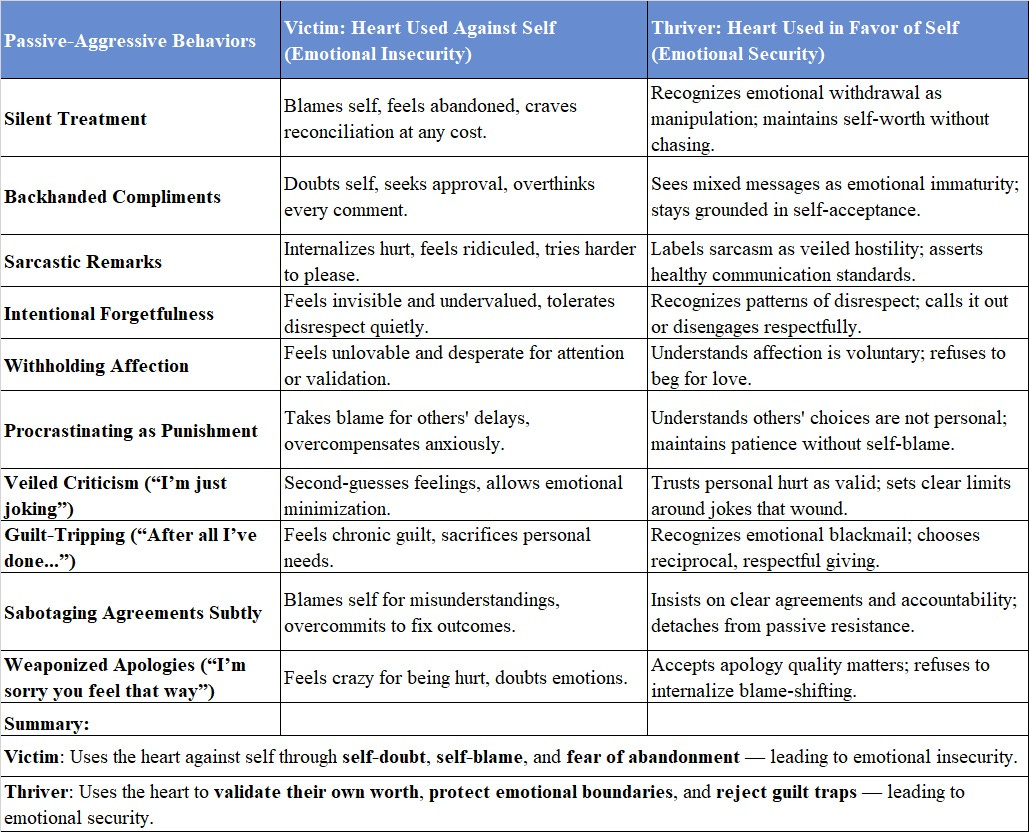
The heart game is played through withholding affection, backhanded compliments, feigned forgetfulness, silent treatment, or subtle digs. It’s the slow corrosion of trust, the constant tightening of invisible emotional knots, and the unspoken invitation for you to "guess" what went wrong.
Signs you’re facing passive-aggressiveness include:
Feeling punished without a direct conversation.
Sensing a mismatch between words and tone.
Walking on eggshells without knowing why.
Being stonewalled or met with weaponized silence.
Both patterns are abusive, though they differ in strategy:
Manipulation uses your mind against you for their benefit.
Passive-aggressiveness uses your heart against you to make you suffer.
When you are manipulated, you lose agency.
When you are subjected to passive-aggression, you lose emotional security.
Why does this matter?
Because if we fail to spot these games, we become unconscious participants.
We may keep trying harder to “fix” what we didn’t break.
We may compromise until there’s nothing left to give.
We may begin to believe that love equals confusion, or loyalty equals silence.
Freedom begins with clarity.
Recognizing manipulation and passive-aggressiveness doesn’t make you paranoid; it makes you precise. It gives you the tools to set boundaries, to refuse entry to mind games and heart games alike.
The antidotes are powerful but simple:
For manipulation: Stay rooted in reality. Check facts. Trust actions over words. Keep your thinking independent.
For passive-aggressiveness: Name the behavior calmly. Refuse to participate in guessing games. Demand directness or disengage.
You deserve relationships that feel like collaboration, not conquest.
Love that feels open, not orchestrated.
Companionship that feels nourishing, not draining.
In the end, the highest game you can play is the game of self-respect—where your mind is clear, your heart is whole, and your boundaries are sacred.